

digital bell jar


All of us are spending much of our actual lives under a digital bell jar.
In botany, a bell jar is a glass cloche placed over a plant in order to keep it in its own atmosphere and conditions. Imagine you live in England and you want to study a tropical plant as it grows. The glass bell-shaped jar separates the plant from everything else, and creates within it certain conditions - a sealed environment that maintains different levels of humidity, indirect sunlight exposure, even a different temperature from the weather outside the glass bell.
In my favorite book – The Bell Jar – Sylvia Plath explains both episodes of extreme productivity and deep depressions as events that “bring the bell jar down” – separating the main character Esther from everything and everyone around her.
Esther finds she can only see “the world itself and the people in it as seen through the distorting lens of a bell jar”.
There is also a line where Esther reports that a bell jar hangs over the heads of other women, too, even ones that “appear happy”.
Once the bell jar is down, it “produces stifling distortions” and Esther and must continuously breathe her own “sour air”.
“Wherever I sat—on the deck of a ship or at a street café in Paris or Bangkok—I would be sitting under the same glass bell jar, stewing in my own sour air.”
Sylvia Plath, The Bell Jar
Understanding that the element of air in the tarot represents the powers of the mind; sitting all the time in “sour air” we might translate to sitting all the time with “sour thoughts” or even “sour mind powers”.

Even as a young feminist in the early ‘90s reading The Bell Jar – I knew in some ways the bell jar was a protection against and a reaction to the world ripe with misogyny around Esther. In the novel, in addition to losing her dad at an early age and therefore being raised by a single mom, Esther also struggles with various “rules and norms” of the overculture, such as:
women are typists, men are writers
a man can have sexual experiences before marriage (and should!), but god help a woman who does
there are respectable women and “loose” women, you can’t be both
unwanted, non-consensual sexual advances and activity by men are normalized by society, while women pay all prices
a man can have both a powerful career and family, but a woman has to choose, and choose fast – high-flying career OR wife and motherhood
there exist men who are “woman haters” and beneath a solicitous veneer, actively seek to harm women
doctors and the medical field talk over women and do not care to find out the real roots of their pain and potential best treatment
women were given ECT therapy twice as often as men even as it hadn’t been studied on women and the adverse side effects were much worse for women
As a young person realizing, as another of my favorite writers Kelly Oxford says “the whole world is against you” – I felt like sometimes I needed a bell jar to separate myself out from a poisonous outer world. Keep your poisonous gases out there, I’ll stay in here; like a baby chick in an incubator.
I think when the novel came out, and Plath ended her biological life, the public just assumed it was Sylvia alone that was crazy. But I have always seen it that Sylvia was a pretty sane human reacting to an INSANE WORLD. Plath’s character of Esther NEEDS the bell jar to protect her from – essentially, capitalism and patriarchy – and then her coping mechanism turns on her and her very existence is jeopardized.
Like many things, the bell jar is able to provide a sort of respite while also really, ultimately being a trap.
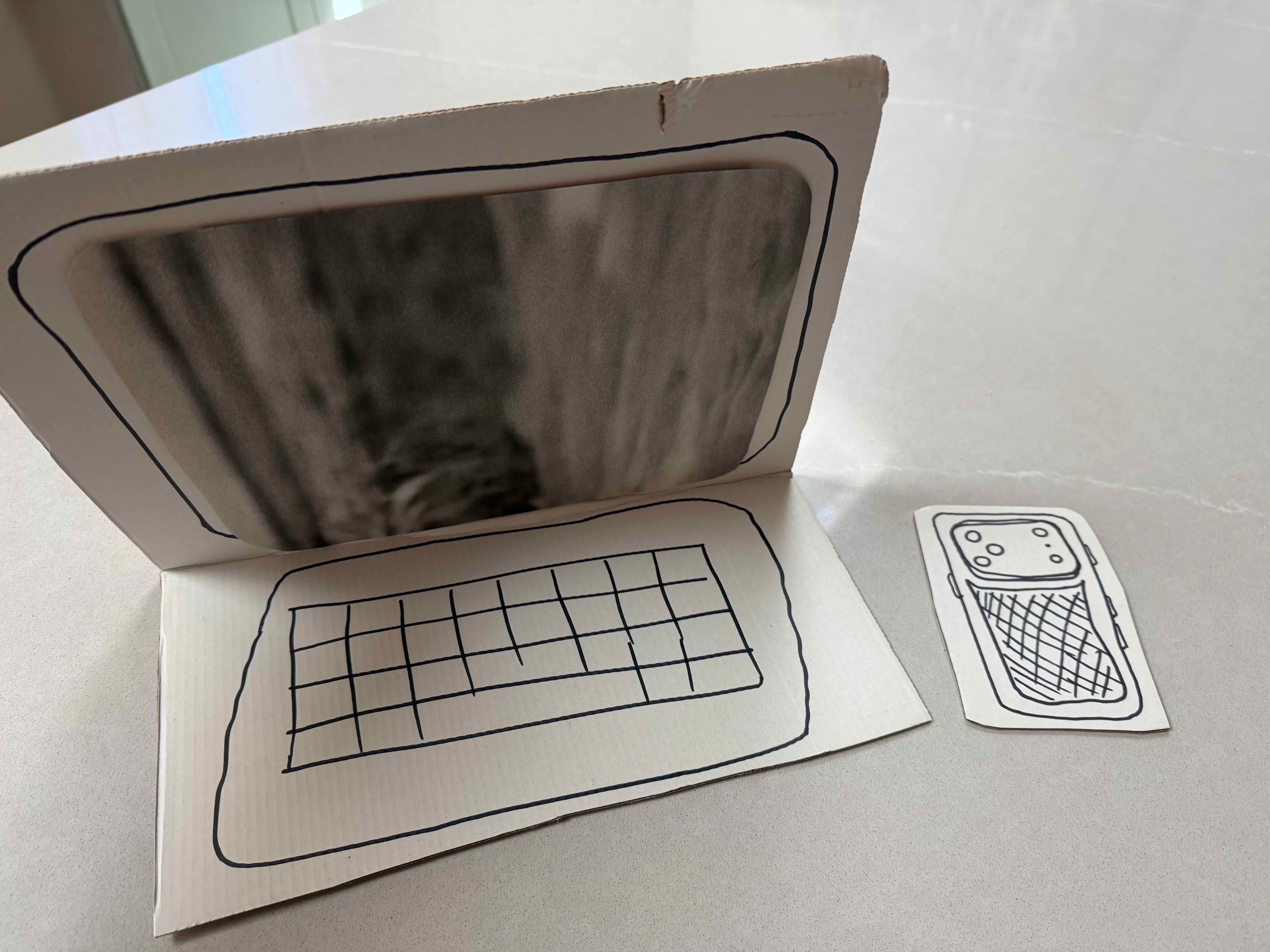
Which brings us to our fucking phones. Which brings us to the algorithmic panopticon that is able to show one person something very different than what every other individual is seeing and hearing. Which brings us to the purveyors of “sour air” that we are breathe for hours every day.
Picture for a moment, as I have, a crowded subway car. And picture everyone in that carriage looking at their phones. And understand that even though everyone is looking at the same type of physical object – a rectangle of plastic with a glass-like screen, little pieces of rare earth metals and bigger pieces of other manmade materials – everyone is really seeing their own algorithm, each individual under their own digital bell jar.
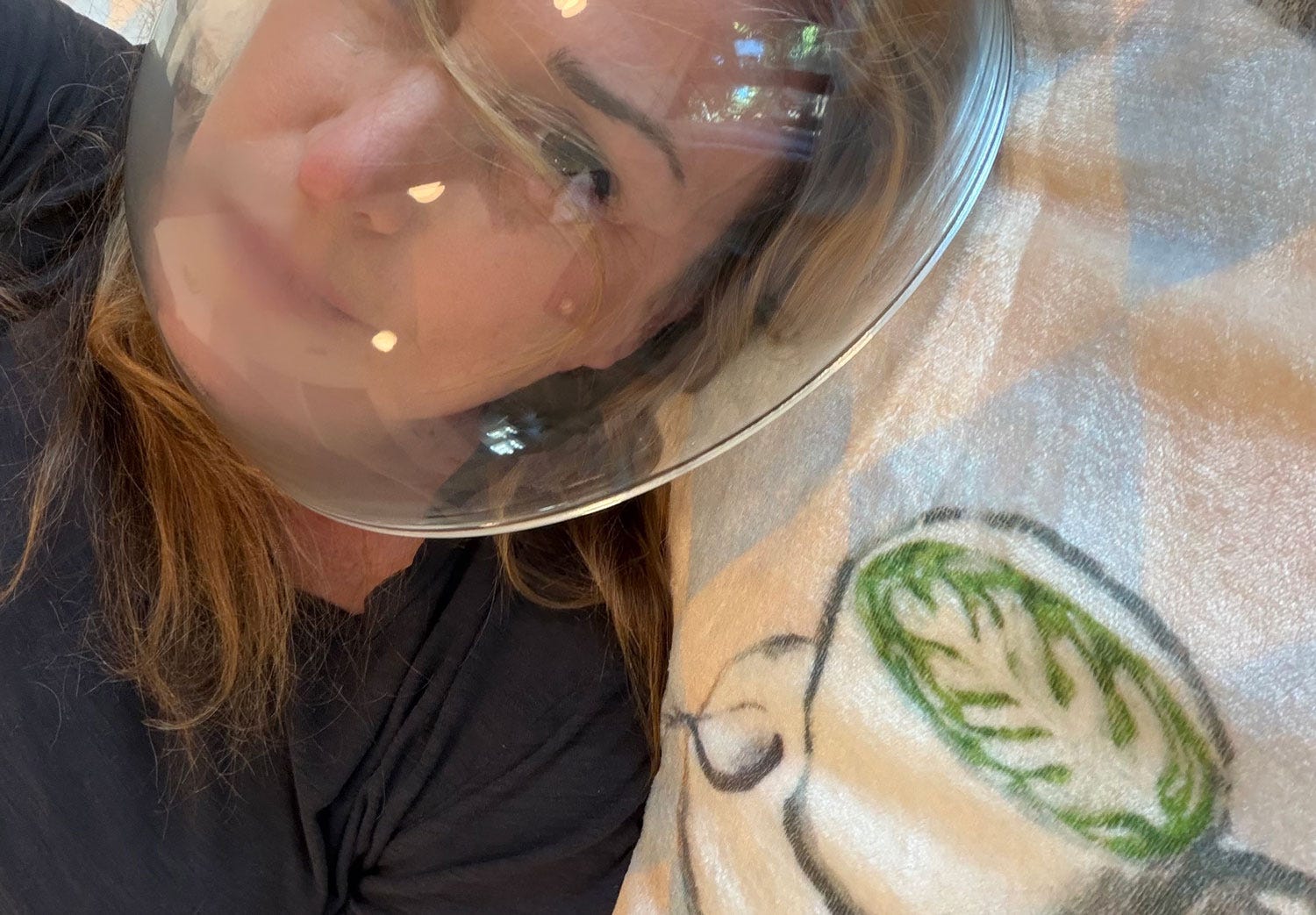
These days, it is not just one bright, brilliant young writer over whom the bell jar descends, but us all – each of us stewing in a mélange of sour air, our little closed environments of digital information and whatever it pings off inside us.
I feel like now we are almost always in different realms from each other. Each of us in our own digital bell of glass, muffling sights, sounds and even the flavor of the air and life on the outside. Incessantly, each of us being fed a different set of “truths” about “the way things are”.
Watch someone take their phone out of their pocket or purse and start to peer intently into it. You may, like me, be able to see the digital bell jar coming down.
Please don’t read this as a condemnation of anything. I am just aiming to name something for us and borrow Plath’s imagery and use it potentially to free ourselves.

See the same subway car you saw before in your mind. Put a glass bell over every person looking at their phone. Or as you go about your business today, when you see folks looking into their phones, see their digital bell jars.
You can even imagine the environments that develop inside various people’s digital bell jars specific to moments in time. On a good day, with the kind of “Haute Neptunian” (a phrase from another favorite writer – Mystic Medusa) temperament that I have, my digital bell jar might be filled with a glittering prismatic mist. On a bad day, my digital bell jar fills with a poisonous, fire-fog in which my consciousness wanders and paces like an angry ghost.
Taking a step further, let’s zoom out and see what it looks like when the vast majority of humanity isn’t looking into the eyes of the person in the next subway seat, because they are entranced, hypnotized. looking into the eyes of the person “influencing” them to buy peptides or blush or The Artist’s Way (or WHATEVER!) on their screen. Missing out on the full flavor of the actual matcha in front of you as you watch someone make a matcha onscreen – with full ASMR. The clink of their spoon on the table instead of the sound of yours.
Again, in my interpretation of the Bell Jar is that in the beginning, the bell jar, the separation is something that Esther needs to protect her out in the wide, patriarchal world.
And, I do think, that our devices - our digital bell jars - can give us a modicum of that same protection.

I just don’t want us – as a species – to get lost in the sauce.
I have written before, many times, about how, as a spiritual person, I see the phones and algorithms degrading our individual life experiences and the overall experience of living in the collective. I bring up the idea of digital bell jars today to expand the frame to include what it might be doing (or certainly is doing) to our species (especially young people – our future).
Meditating, I saw a comical vision of all of us moving about with these glass bells on our heads, clanking about and running into each other in the physical world as we become farther and farther away from each other in the digital realms.
Humans are pack animals – friendship, intimacy, community, social acceptance – these are actual things we need.
In another meditation I saw us all with our glass bells on our heads, each one filling with dark, malevolent spirits and entities. (In the interest of brevity (lol), I won’t go into the dark occult and how I believe it uses our devices to “get to us” – but I may share my thoughts on this in a future piece. I will say, Rudolph Steiner believed electricity was “dead light” or “false light” and that we are living in an era of dark occult tricksters at the top, in case that will spark your sense of self-protection…)
We have all had the experience of sitting next to someone who is looking at their phone. If we are paying attention, we can sense their awareness has moved on from the physical proximity we share. I used to think of this as a moment where the person on the phone “went” to a different place – that their consciousness was no longer with me.
But now I see they didn’t “go” anywhere at all. Instead, a digital bell jar descended over them, and began to show shadows on the wall of their own personal Plato’s Cave. (allegory of the cave). My previous perception that they “went somewhere” was an illusion. They weren’t “going anywhere”, they were just watching the hallucinations reflecting and replaying on the curved glass walls of the jar and likely being influenced by nefarious forces.
The great thing about a bell jar is that, it is easily removed, just lift it away and put it to the side.
That is what I hope we as individuals will be inspired to do every now and again.
Perhaps, if we are conscious, as we are coping with the fallout of this administration, we can actively engage our digital bell jar without getting totally trapped in its “sour air” forever.
LOTS OF LOVE to you,
Jess
IMPORTANT ANNOUNCEMENTS:
From now until the end of the summer, our weekly message will move from Tuesdays to Thursdays. The format will also change slightly, but hopefully in a way that is inspiring for you. So I will “see” you again in this space on May 28th.
Likewise, through the end of summer I will not be posting in the paid space on Fridays. If you want to pause your subscription it is pretty easy to do, or if you want to leave it to support the rest of the work and keep enjoying all the posts and the epic 99 visions audio project.
Also – while we are here – the old Streamers library is closed. If you have any questions about that please respond to this email.
The new library is robust – a wonderland internet space - and also - unlike the old Streamers library, it has great functionality for ease of canceling and being notified before your membership renews.
For those of you who want to see what we are doing in there - here’s a clip from this weekend’s Taurus New Moon in the Lunar Library wing…
“Of course, there is nothing new about industries profiting from women’s vulnerabilities. Over the past decade though - with the rise of social media platforms, digital advertising, and artificial intelligence (AI) - corporations have learned how to commodify not only girls’ and young women’s faces and bodies, but every part of our personal lives.
Corporations now have more immediate and intimate access to us than ever before. Smartphones and social media allow industries and influencers to reach girls all the time, day and night.
Tech giants like Google, TikTok, and Meta (the owner of Facebook, WhatsApp, and Instagram) can also track every girl’s move online, collecting and storing massive amounts of data on her activity.
This data is then sold to advertisers, who target her constantly through customized ads, delivered by algorithms on feeds designed to be as addictive as possible. Every worry a girl has can be monitored, categorized, and monetized: from hating the shape of her nose to fearing she might have a mental health disorder to distrusting her boyfriend.
This is aside from the rise of beauty, mental health, and dating influencers who pretend to be her best friend while preying on her insecurities. The scale and sophistication of this exploitation is unprecedented.”
“We simply have less need for human interaction than ever before. Delivery apps can bring food straight to our doors, with an option to leave it outside so we can avoid looking another person in the eye.
Mental health apps connect us with therapists, who we can text from our bedrooms instead of talking to. Girls can now get everything they need without interacting with another human being, from self-service checkouts to Uber Eats, from dating apps to Pornhub, from online lectures to TikTok book clubs. And if all that makes us socially anxious? There are apps for that too.
Now it feels as if every online platform promises community. We are reminded that “Facetune is more than just an app; it’s a community,” that “170 million Americans find community on TikTok,” and that even “the Pornhub Community wants you!”
By 2023, when asked where they found community Gen Z respondents ranked social media, online groups, and video games above work, school, clubs, and other in-person organizations. Today, when girls think of the word community, they likely think of Instagram and TIkTok; nothing local, no neighborhoods. For many of us, this is the only community we have ever known.”
- Freya India, Girls® (italics mine)
“Many young women don’t have friends anymore; we have followers. We don’t care about each other’s lives; we consume them as content. We don’t have people we can be vulnerable with; we have people who view our Stories. It’s hard to tell if friends are loyal, or hoping we like their posts back. Meeting someone new now means swapping socials, then scrolling through and skipping past each other’s lives, forever.
And now the very companies that hollowed out our friendships have the nerve to sell us their substitutes. Girls and young women are sold simulations of human connection like never before, each perfectly customized to our wants and desires. We eat dinner with YouTubers. We pretend to FaceTime influencers. We play video games alone in our rooms, or watch strangers play instead. And where has this left us? We are terrified to talk to our neighbors but can open up on TikTok. We have access to billions of people, but feel lonelier than senior citizens. We have been left with thousands of likes and comments, all these followers and friends, hundreds of notifications a day, and a fear of looking another human being in the eye.
…
We were lied to. Not only by platforms promising connection but also by a culture insisting that family breakdown was normal, and responsibility optional. But we are not products, we are people. Our relationships are more than accessories to be displayed, our commitments more than contracts to be negotiated. Now this retreat from each other looks less like empowerment or progress and more like surrender to tech companies, allowing them to sell ups simulations of community, of friendship, even of love.
Girls’ natural instincts - to explore, to connect, to take risks - have been numbed. Teenage girls who once stayed up all night chatting on the phone have become teenagers whose hearts race at the sound of a ringtone. Girls once desperate to sneak out with friends have become girls who dread making plans with each other. Girls who in the past would have been giddy about love and dating have become terrified of relationships, of ending up like their parents. This is not normal teenage angst; this is a tragedy.”
- Freya India, Girls®
“On social media, many of the most chaotic and emotionally lawless people you’ve ever known are posting on a regular basis about having at long last achieved inner peace.”
- Jia Tolentino
“Life moves on, whether we act as cowards or heroes. Life has no other discipline to impose, if we would but realize it, than to accept life unquestioningly. Everything we shut our eyes to, everything we run away from, everything we deny, denigrate or despise, serves to defeat us in the end.”
- Henry Miller
“more scrolling, more apps, more ten second videos masquerading as ‘information’. shrink into yourself. yes, like that. google that word because you can’t even remember the last time you saw a physical dictionary, and watch as we condition you to accept the first AI aided summary as a definition. watch the machines we are draining the world’s resources for get smarter as you get dumber.
watch as you start to become afraid of that which you do not understand. regress, regress, regress until you are making the same mistakes your parent’s generation did. people used to be lead by their moral compass; now, it is our algorithms that lead us.
we’ve been reduced to jaded lines, all softness eroded. the tools we we would use to fight this persistent culling of personhood have been stripped from us. back home, the tribe’s poet had more power and respect than even the clan chief. mayors and political advisors like my grandfather shared their titles with men and women twice their age who had never had any ‘formal’ schooling but who still knew more than the council did. they were responsible for swaying the heart, for bearing testimony to their people all because they were keepers of history and poetry.
can you remember the last time you committed something to memory? in school we would inhale textbooks and pass it off as ‘learning’, in truth only copy and pasting passages on myosis and the Weimar republic so that we could pass our exams- but even empty, shallow remembrance has died. even the intimate act of remembering someone’s phone number has become a lost art.
convenience. how much it has stolen from us. we don’t just want more than we ever have, not only do we consume mindlessly like never before but now we want everything to be easy. we want that package to be here tomorrow, never mind that that sweater is being shipped from the other side of the world.”
- Ayan Artan, Rent Free
“Gathering all this together, what I’m suggesting is that we take a protective stance toward ourselves, each other, and whatever is left of being human - including our alliances that sustain and surprise us. I’m suggesting that we protect our spaces and our time for non-instrumental, noncommercial activity and thought, for maintenance, for care, for conviviality. And I’m suggesting that we fiercely protect our human animality against all technologies that actively ignore and disdain the body, the bodies of other beings, and the body of the landscape that we inhabit.
…
Of course, such a solution isn’t good for business, nor can it be considered particularly innovative. But in the long meantime, as I sit in the deep bowl of the Rose Garden, surrounded by various human and nonhuman bodies, inhabiting a reality interwoven by myriad bodily sensitivities besides my own - indeed, the very boundaries of my own body overcome by the smell of jasmine and just-ripening blackberry - I look down at my phone and wonder if it isn’t in its own kind of sensory-deprivation chamber. That tiny, glowing world of metrics cannot compare to this one, which speaks to me instead in breezes, light and shadow, and the unruly, indescribable detail of the real.”
- Jenny Odell, How to Do Nothing
Refresh yourself, sister
With the water from the copper bowl with bits of ice in it -
Open your eyes under water, wash them -
Dry yourself with a rough towel and cast
A glance at a book you love.
In this way begin
A lovely and useful day.
- Bertolt Brecht
“Last night I had the strangest dream. I was in a laboratory with Dr. Boas and he was talking to me and a group of other people about religion, insisting that life must have a meaning, that man couldn’t live without that. Then he made a mass of jelly-like stuff of the most beautiful blue I had ever seen - and he seemed to be asking us all what to do with it. I remember thinking it was very beautiful but wondering helplessly what it was for. People came and went making absurd suggestions. Somehow Dr. Boas tried to carry them out - but always the people went away angry, or disappointed - and finally after we’d been up all night they had all disappeared and there were just the two of us. He looked at me and said, appealingly “Touch it.” I took some of the astonishingly blue beauty in my hand, and felt with a great thrill that it was living matter. I said “Why it’s life - and that’s enough” - and he looked so pleased that I had found the answer - and said yes “It’s life and that is wonder enough.”
- Virginia Woolf
“I am of the order whose purpose is not to teach the world a lesson but to explain that school is over.”
- Henry Miller
“I feel like an idiot who had been obediently digging up pieces of coal in an immense mine and has just realized that there is no need to do this, but that one can fly all day and night on great wings in clear blue air through brightly colored magic and weird worlds.”
- Sylvia Plath

Eff the brevity -
spill the tea, Sister!
💕🐙💕